
Everyone’s thoughts are currently focused on harvesting corn and soybeans. And rightly so, considering the wet September we endured this year.
This article is an early reminder that once harvest is completed, next steps might include collecting fall soil samples to test for the soybean cyst nematode (SCN).
You’ve likely read or heard that SCN can seriously reduce soybean yields and the pest is commonly found in Iowa fields. The first step to actively managing SCN is collecting soil samples to determine if it is present in a field and at what levels.
What fields should be sampled?
There are two advantages to sampling harvested corn fields for SCN in the fall. Fall sample results can be very useful in developing or adjusting an SCN management action plan for 2027 if soybeans will be grown in those fields. Adjustments include planting soybean varieties with a different genetic source of SCN resistance and/or using a nematode-protectant seed treatment. Secondly, it is much easier to walk through a harvested corn field to collect soil cores in the fall compared to walking through a standing corn crop!
Results of fall samples collected from harvested soybean fields can also be useful. The results may help explain 2026 soybean yields. And if numbers are high or very high and yields were substantially lower than expected, the results may provide incentive to revise or bolster efforts to manage SCN when soybeans are grown in the field again.
Whether you’re sampling corn or soybean fields, the basics are the same
SCN soil samples should consist of 20 or more 1-inch-diameter, 6- to 8-inch-deep soil cores collected from an area or zone in a field using a zigzag or other systematic pattern. If possible, collect sets of cores to form composite samples representing areas with similar characteristics such as soil type, topography or drainage, cropping and/or tillage history, or infestations of winter annual weeds that can serve as hosts for SCN. See the diagram below for an example.
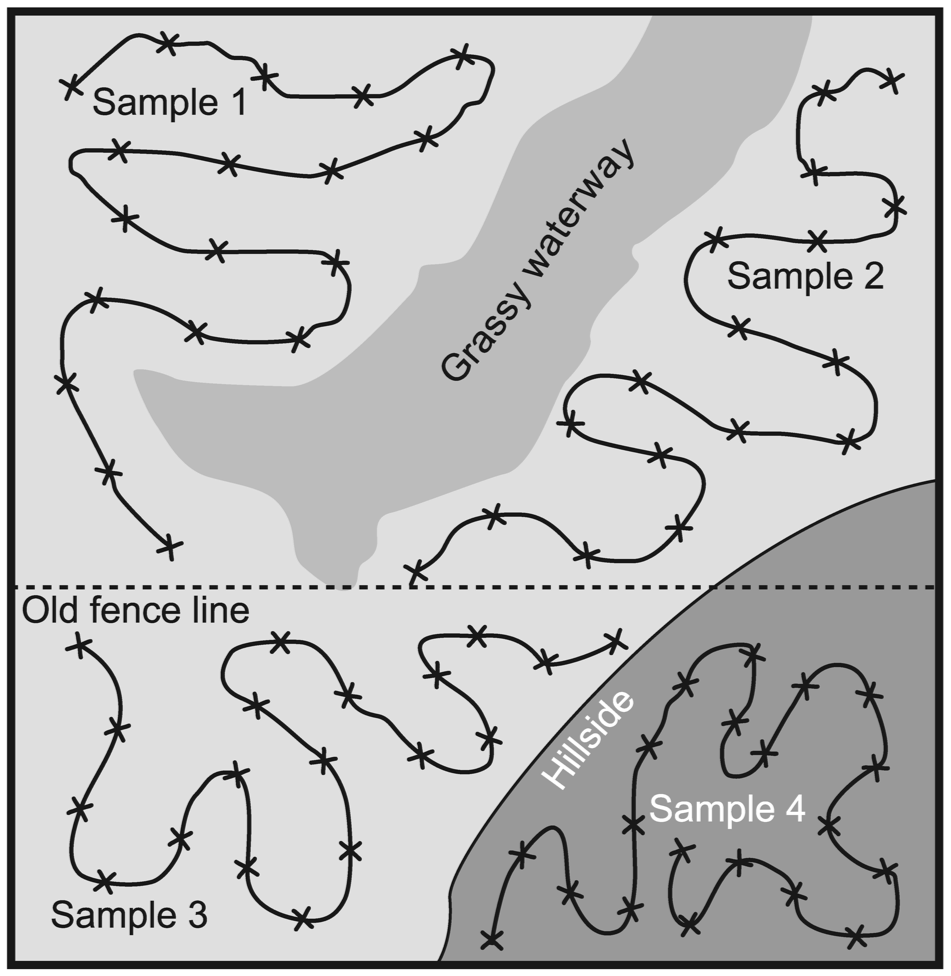
Place collected soil cores in a bucket, mix the soil well, then transfer it to a soil sample bag or plastic bag. Write the sample identification information on the outside of the bag with permanent marker, seal the bag well, and send the samples to a facility that processes them for SCN egg counts. Send the soil samples to a facility that processes them for SCN egg counts.
Iowa State University’s Plant and Insect Diagnostic Clinic processes SCN soil samples, and they offer guidance on sample collection and a Plant Nematode Sample Submission form. Additionally, several private soil laboratories in Iowa and nearby states offer SCN soil sample processing. The SCN Coalition lists university and private labs that process SCN samples in Iowa and other states.
Additional information
Iowa State University compiles a list of SCN-resistant soybean varieties for Iowa annually. The publication contains information about varieties in late maturity group 0 and groups 1, 2, and 3. The recently updated list is available on the ISU Extension Store.
Iowa State University also evaluates >200 SCN-resistant soybean varieties each year in experiments located throughout Iowa’s nine USDA crop reporting districts. The results are published online in December and are distributed to Iowa farmers and those who advise them as a printed report inserted in an early January issue of the Iowa Farmer Today newspaper.
Efforts to collect and compile the SCN-resistant soybean variety information and to conduct the variety evaluation experiments are supported in part by soybean checkoff funds from the Iowa Soybean Association.
Links to this article are strongly encouraged, and this article may be republished without further permission if published as written and if credit is given to the author, Integrated Crop Management News, and Iowa State University Extension and Outreach. If this article is to be used in any other manner, permission from the author is required. This article was originally published on October 14, 2026. The information contained within may not be the most current and accurate depending on when it is accessed.

- Morrill Professor
- Nematologist