
Iowa has seen an extraordinary amount of rain over the last three months. Parts of central Iowa received 12 inches of rain in just two days in July, and September was one of the wettest on record, with some areas receiving more than 10 inches of precipitation and experiencing rainfall on more days than not. Beyond delaying harvests, all that water is showing up in perennial alfalfa fields as yellowing plants and bare spots, from flooding or prolonged periods of saturated soils.
Alfalfa is well known for disliking “wet feet.” Like us, plants need oxygen to respire, and saturated soil cuts off that supply. How long alfalfa can survive depends heavily on temperature. When it’s warm, both the plant and soil microbes respire faster and use up oxygen quickly, so standing water in hot weather can kill alfalfa within hours. Under cool conditions, the crop can survive for several days. This year, many fields sat under water, and their ability to recover is questionable.
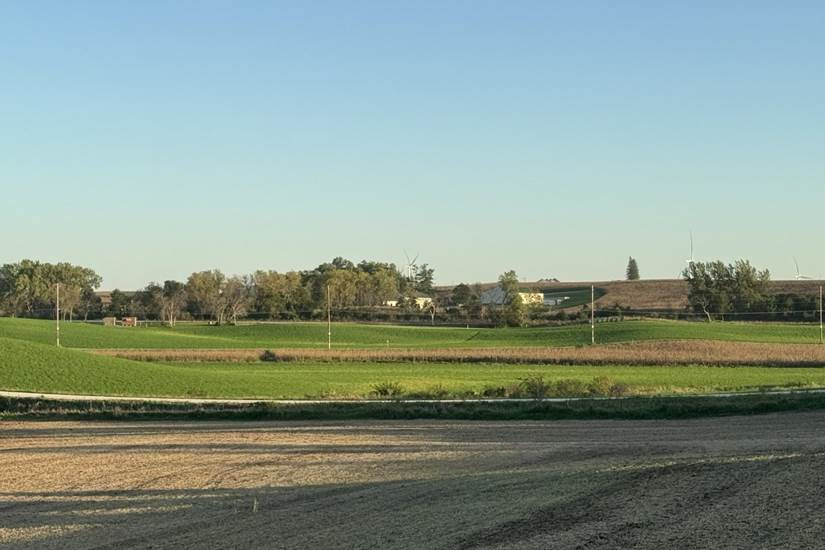
Figure 1: Alfalfa field with yellowing areas visible in low spots following excessive rainfall. (Photo Credit: Erika Woolfolk)
Start with the roots
The most useful thing you can do now is assess your stand. As with any alfalfa stand assessment, that means digging plants and checking the roots and crowns. Flooding puts major stress on the crown and taproot, and those are what the plant depends on for regrowth and winter survival. While symptoms aboveground may appear severe, root and crown health are often the best indicators of whether a stand will survive and remain productive.
- Healthy roots are white and firm.
- Unhealthy roots turn brown and become soft or slimy. Roots that feel spongy after flooding are a strong sign the plant won’t survive.
In addition to evaluating root health, conduct stem or stand assessments (Navigating Winter Injury in Alfalfa Stands: Assessment, Management, and Interseeding Strategies) before winter to ensure the stand counts remain adequate. Because much of this wet weather occurred late in the season, repeating these assessments in early spring will be valuable. Many plants are entering winter under significant stress, and some injury may not become apparent until spring green-up.
What flooding does to the plant
Even plants that survive can be set back in several ways:
- Root hair loss. The fine root hairs that handle most nutrient and water uptake are especially vulnerable to waterlogging. Surviving plants have to regrow them before they can feed themselves normally again.
- Suffocation. A submerged plant can simply run out of oxygen, which leads to crown deterioration even without disease.
- Root and crown disease. Saturated soils favor Aphanomyces root rots race 1 and 2, Phytophthora root rot, nematodes, and other pathogens, and a weakened plant gives them the upper hand.
- Micronutrient deficiency. Low-oxygen conditions can make iron and other micronutrients unavailable, through soil chemistry changes like excess bicarbonates as well as through root damage.
- Nodule damage. Rhizobia are damaged or weakened which can limit N-fixation.
Why is my alfalfa yellow?
Some fields weren’t killed outright but look yellow and nitrogen deficient. That seems odd for a legume that fixes its own nitrogen. Part of the answer is that saturated soils also starve the rhizobia bacteria in the root nodules of oxygen, so less nitrogen gets fixed and delivered to the plant. Damaged root hairs and micronutrient tie-up can add to the yellowing, too.
What to do next
Your next steps depend on how much damage you find.
Large dead areas or widespread crown/root damage: Consider thickening the stand or terminating and rotating the field. Because of autotoxicity, reseeding alfalfa into an established stand rarely works. Instead, plan to interseed a cool-season perennial grass such as orchardgrass, festulolium, or perennial ryegrass in spring, or a legume such as red clover. It’s too late in the season to establish seedings this fall. What you decide on interseeding should be determined by the goals of your field.
Healthy roots but yellow plants: Avoid cutting. We’re well into the fall, and a harvest now would add stress to plants already recovering from flood damage and cut into the root reserves they need going into winter. Give the stand time to recover as the soil dries and the roots and nodules regrow.
Watch for weeds. Thin, flood-weakened stands leave openings for cool-season, flood-tolerant winter annual weeds, which can take over a weakened field. Scout this fall and again early next spring so you can manage weeds before they outcompete the recovering alfalfa.
For more information on stand assessments and overseeding strategies: Navigating Winter Injury in Alfalfa Stands: Assessment, Management, and Interseeding Strategies
Links to this article are strongly encouraged, and this article may be republished without further permission if published as written and if credit is given to the author, Integrated Crop Management News, and Iowa State University Extension and Outreach. If this article is to be used in any other manner, permission from the author is required. This article was originally published on October 19, 2026. The information contained within may not be the most current and accurate depending on when it is accessed.

- Assistant Professor
- Forage Extension Specialist