
Weather

Weather and climate are critical factors in Iowa's crop production. Find more information on weather-related tools, weather/climate outlooks, and resources for managing through weather events like flooding, windstorms, hail, and drought.
Weather Maps
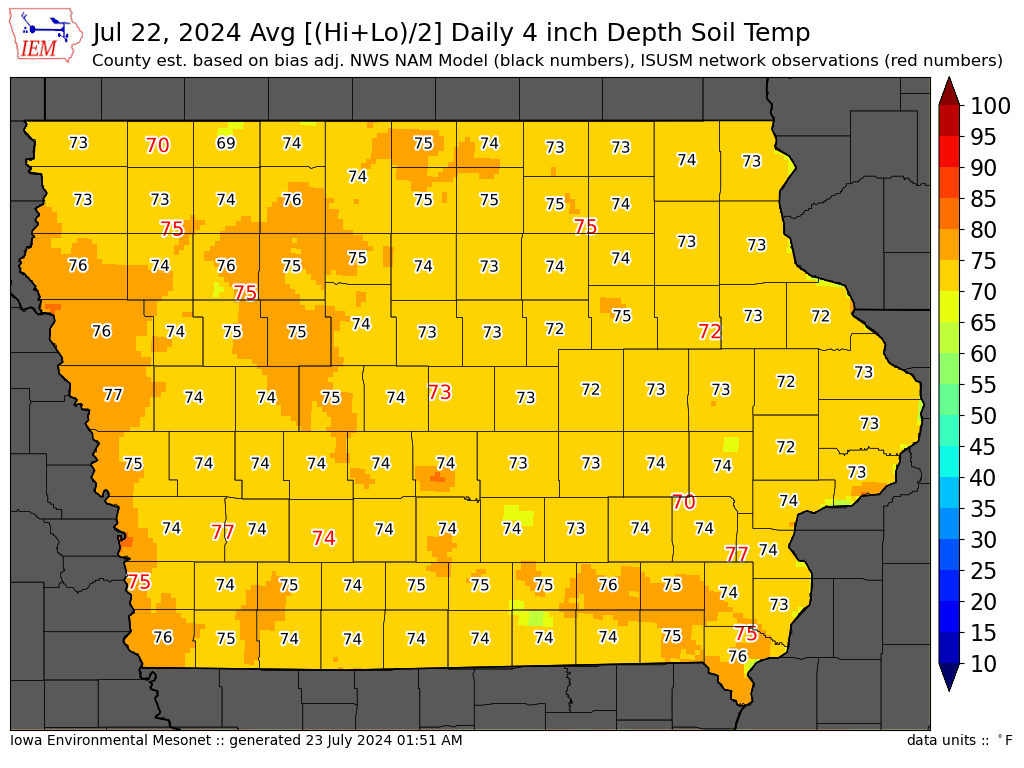
Daily Soil Temperatures
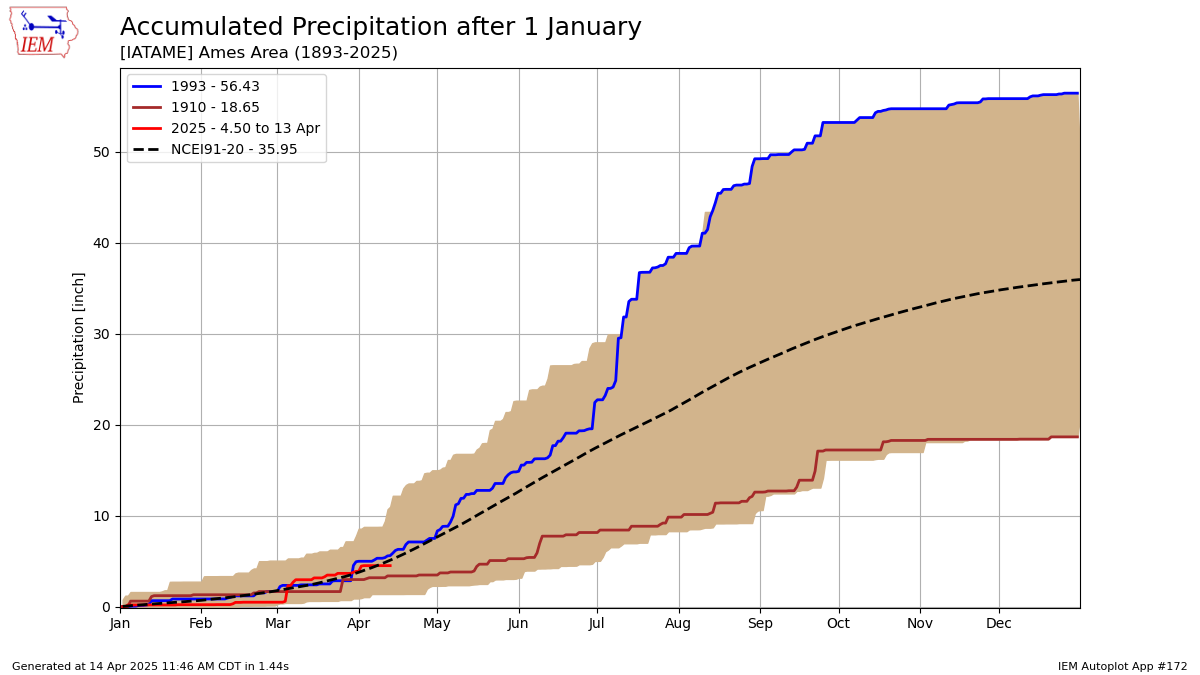
YTD Accumulated Precipitation in Ames

Departure from normal precipitation from last 7 days across Iowa
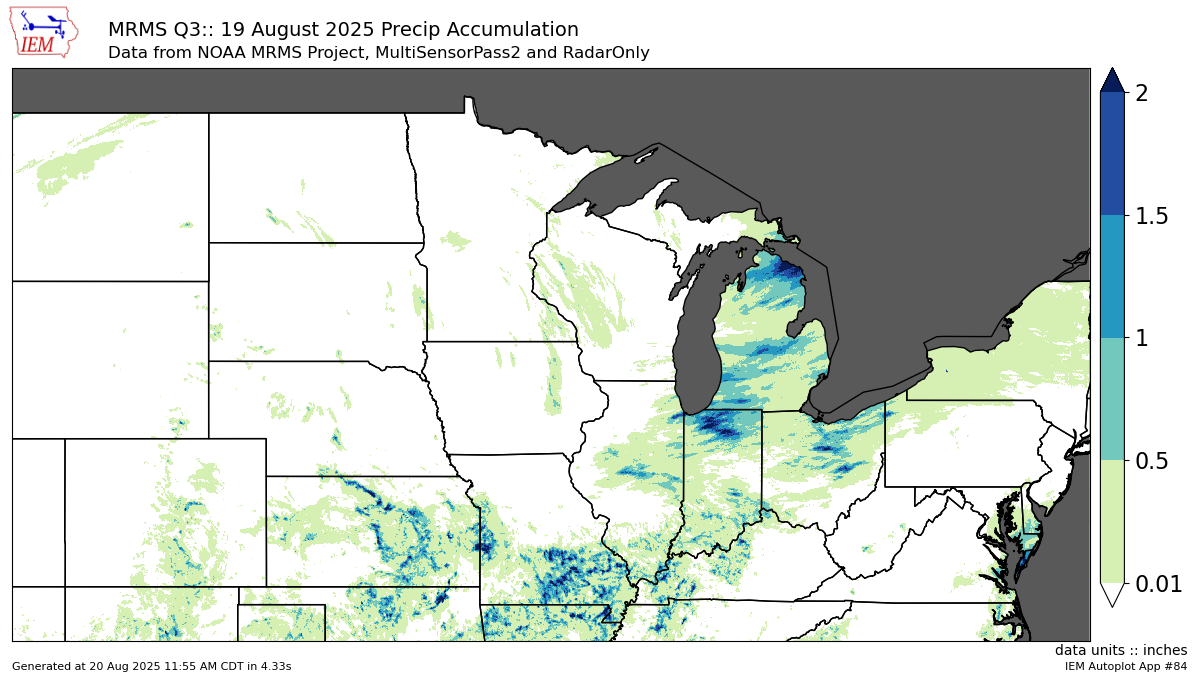
24 Hour Precipitation Across Iowa

What in the Weather?
Wish you could understand the weather better? Join Dan Fillius, Iowa State University Extension Horticulture Field Specialist, Madelynn Wuestenberg, ISU Extension Ag. Climatology Specialist, and Dr. Justin Glisan, Iowa’s State Climatologist, as they discuss what is happening in the world of Iowa weather.
Timely Insights on Weather
-
October 27, 2026Content Author


If you feel behind this fall, you are not alone. Just under half of Iowa's corn is harvested, 4-inch soils are still in the upper 50s, and a very strong El Niño is likely to keep them warm well into November.
For fall anhydrous ammonia, the message is simple: it's not time yet. The recommendations haven't changed. What has changed is when the window is likely to open, and how much patience it will take to wait for it.
-
October 6, 2026Content Author


Harvest is underway across Iowa, and one of the biggest surprises this season may not be on the yield monitor. It is at the fuel pump. Diesel prices have increased sharply ahead of the 2026 harvest season, substantially increasing operating costs, making every tillage pass more expensive than budgeted for last winter. Harvest fuel costs are unavoidable; however, you may not need as much fall (or spring) tillage as you think to prepare for the 2027 growing season.
-
October 5, 2026Content Author
Iowa rainfall in 2026 has arrived in “big buckets”, with above average temperatures and rainfall raising concerns about crop quality and post-harvest storage. Nearly three-quarters of Iowa’s weather stations reported at least 4 inches of rainfall or greater in September, according to ISU’s Mesonet data. As fields begin to dry out, several concerns have emerged about grain quality, both in-field and post-harvest.